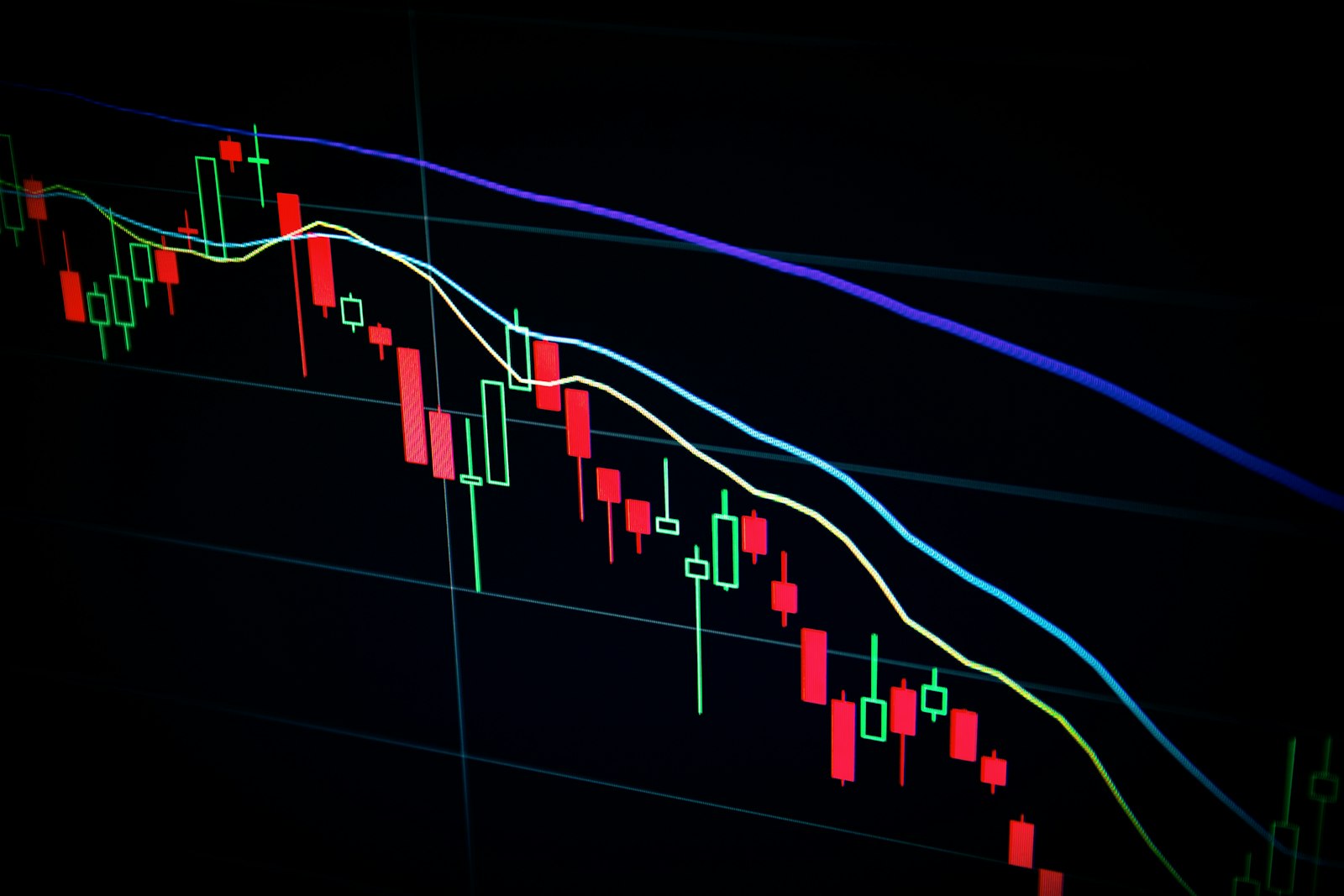
A year ago, on the night of October 10, 2025, the crypto market went through the largest liquidation event it had ever recorded. Within 24 hours, more than $19 billion in leveraged positions were force-closed across over 1.6 million trading accounts, according to CoinGlass data cited by CoinGecko’s breakdown of the crash. Bitcoin fell from a Friday high of $122,574 to $104,782. Several altcoins briefly lost far more.
The headline trigger was political. The size of the damage was not. Most of it came from leverage unwinding on itself, a liquidation cascade, and that mechanism is worth understanding because it will happen again.
What Triggered the Crash
On Friday, October 10, 2025, President Trump posted on Truth Social that the US would put a 100% tariff on all Chinese imports from November 1, on top of existing tariffs. Risk assets sold off. On its own that’s a normal bad day. What turned it into a record was the amount of leverage sitting in crypto derivatives at the time, and how fast that leverage was forced out.
The worst of it happened in a narrow window. A timeline from Amberdata, cited by CoinGecko, puts the violent phase starting around 20:50 UTC. About $6.93 billion in positions were liquidated over the next 40 minutes, roughly 70% of the day’s total. In the single worst minute, around 21:15 UTC, $3.21 billion was liquidated.
How a Liquidation Cascade Works
A liquidation is the forced closing of a leveraged position when losses eat through the margin backing it. As Holdy Lab’s explainer on leverage and liquidation puts it, the adverse move that wipes out your margin is roughly 100% divided by your leverage. At 10x that’s about a 10% move against you. At 50x it’s about 2%.
A cascade happens because liquidations aren’t neutral events. When an exchange liquidates a long position, it sells it into the market. That selling pushes the price down, which pushes the next group of leveraged longs past their liquidation price. They get sold too, and the price drops further. Each round of forced selling triggers the next one.
Two things make this worse in crypto than in most markets:
- Leverage is cheap and everywhere. Perpetual futures with high leverage are a few clicks away on most large exchanges, so a lot of positions sit within a few percent of liquidation at any given time.
- Liquidity thins out exactly when it’s needed. Market makers pull back during violent moves. With fewer buyers in the order book, each forced sale moves the price further than it would on a calm day.
On October 10 both happened at once. That’s how a tariff headline turned into a minute with $3.21 billion in liquidations.
Why Even “Safe” Positions Got Hit
The part of October 10 that surprised experienced traders was that hedged positions got hurt too.
Collateral lost its value on one exchange. The synthetic dollar USDe, widely used as margin collateral, fell to $0.65 on Binance, about 35% below its peg. It did not fall that far on other venues. Binance’s wrapped staking tokens wBETH and BNSOL also lost their pegs there. According to CoinGecko’s account, Binance’s pricing for these assets relied on its internal order books rather than external price feeds. When those books went thin, the collateral’s value on paper collapsed, and accounts that used it as margin got liquidated even if their trades were fine.
Auto-deleveraging closed winning positions. When a liquidation can’t be filled at a price that covers the losses, some derivatives venues use auto-deleveraging (ADL): they forcibly close positions on the profitable side to balance the books. Traders who were running delta-neutral strategies, a long position hedged with a short, had their shorts closed by ADL and were left with naked longs in a falling market. On paper they had no directional risk. In practice they lost on both legs.
Exchanges went down. CoinGecko reports that dYdX was offline for about eight hours and Lighter had a 4.5-hour outage, while Binance said its systems were under heavy load. If you can’t log in, you can’t add margin or close a position. You just watch.
What This Means for Your Own Trading
None of this needs predicting the next tariff tweet. It’s about surviving the night the market does something you didn’t expect.
- Your leverage sets your survival distance. A 10x position can be liquidated by a 10% move. On October 10, Bitcoin fell about 14.5% from its Friday high, and many altcoins fell much further. If your position can’t survive a move that size, it’s not a question of whether it gets liquidated, only when.
- Know what your collateral is worth when things break. Margin in a stablecoin or a wrapped token is only as good as the price your exchange assigns it during a crash. Plain stablecoins or the asset itself are less exposed to that one-venue pricing risk.
- A hedge on one exchange is still a bet on that exchange. ADL and outages are venue-specific risks. Read your exchange’s liquidation and ADL rules before you rely on a hedge.
- Use a stop you placed in advance, and accept slippage. In a cascade, a stop-loss may fill well below its trigger price. That’s still better than a liquidation, which takes the whole margin plus fees.
- Size so that a bad night is survivable. Our explainer on risk of ruin shows how position size, not win rate, decides whether an account survives a streak of bad outcomes. The same logic applies to a single violent night.
The emotional side matters as well. After a night like that, the urge to jump straight back in and win it back is strong. That’s the pattern we describe in revenge trading and the break-even effect. A rule you set in advance helps here. Our guide to if-then rules for trading discipline shows how to write one, for example: “If I get liquidated, then I don’t open a new position for 24 hours.”
Frequently Asked Questions
Why did crypto crash on October 10, 2025?
The immediate trigger was President Trump’s announcement of a 100% tariff on Chinese imports. The scale of the crash came from a liquidation cascade. Heavily leveraged long positions were force-closed, and the forced selling pushed prices down into the next layer of liquidations.
How much was liquidated on October 10–11, 2025?
More than $19 billion in leveraged positions were liquidated within 24 hours, across over 1.6 million accounts, according to CoinGlass data cited by CoinGecko. Some outlets report slightly higher totals, around $19.3 billion, depending on the data cutoff.
Was it the biggest liquidation in crypto history?
By the commonly cited CoinGlass figures, yes. It’s the largest single-day liquidation event on record.
What is a liquidation cascade?
It’s a chain reaction in leveraged markets. Forced selling from liquidated positions pushes the price further, which triggers more liquidations, which push the price further still. It stops when leverage is flushed out or buyers step in.
What is auto-deleveraging (ADL)?
ADL is a mechanism some derivatives exchanges use when a liquidated position can’t be closed at a price that covers its losses. Instead of absorbing the loss, the exchange closes positions on the profitable side, usually starting with the most leveraged and most profitable traders.
How do I avoid getting liquidated?
Use lower leverage so that a large move doesn’t reach your liquidation price, keep margin in assets whose price is hard to distort on one exchange, place stops in advance, and size positions so that losing one isn’t fatal to the account. No setting removes the risk entirely while you’re using leverage.
Educational content, not financial advice.